
Developing therapies that stop tumor growth and metastasis by blocking the expression of HERV‑K
Contact Us
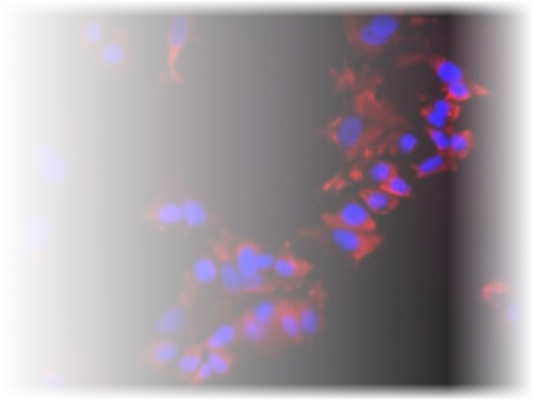
MCF-7 human breast cancer cells strongly express pro-metastatic CK-19

The challenge

Most cancer treatments today work by targeting specific markers on tumor cells. But the markers currently used are only found in a small fraction of patients, and they also appear on healthy cells, which can cause serious side effects. Many patients with solid tumors still have few effective options.

The field needs a new kind of target: one that is present on tumors but largely absent from normal tissue.
70-80%
of solid tumors express HERV-K
Low / None
expression in normal adult tissues
6,000+
tumor & normal biopsies analyzed
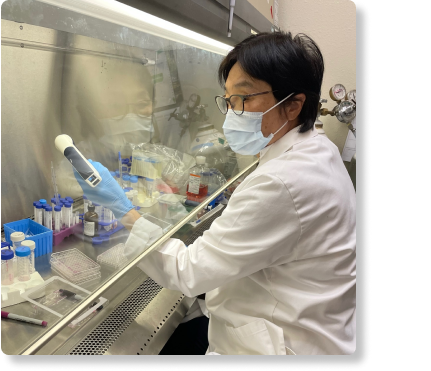
SunnyBay Biotech CEO Feng Wang-Johanning pictured in the lab

Our approach

Buried in our DNA are ancient viral sequences called human endogenous retroviruses (HERVs), making up about 8% of the human genome. They are normally silent in healthy adults.

HERV‑K, one family of these sequences, gets reactivated in cancer cells. It appears on their surface, acts as an upstream driver of tumor growth, and its expression increases as the disease progresses and spreads.

SunnyBay has developed therapies that specifically recognize HERV‑K on cancer cells, delivering treatment directly to tumors while leaving healthy tissue unharmed.

How it works

SunnyBay's lead therapy, SBB001, is an antibody-drug conjugate (ADC) built on a fully humanized monoclonal antibody with high specificity for HERV-K, paired with clinically validated payloads including MMAE, SN38, and DXd. Think of it as a guided missile: an antibody that finds cancer cells, combined with a powerful drug that destroys them from the inside.
1
Find
The antibody recognizes HERV-K on the surface of tumor cells and binds to it selectively.
2
Enter
The cancer cell absorbs the antibody-drug complex, pulling it inside.
3
Release
Once inside, the drug payload is released directly within the cancer cell.
4
Destroy
The cancer cell is killed while healthy cells remain unaffected.

Cancers we target

HERV-K is expressed in approximately 70-80% of multiple solid tumor types. SunnyBay's approach has shown activity across a broad range of cancers, including:
Breast Cancer
Lung Cancer
Ovarian Cancer
Pancreatic Cancer
Colon Cancer
Melanoma

In preclinical studies, SBB001 has demonstrated tumor growth inhibition, reduced metastatic spread, and extended survival, including in hard-to-treat tumors with KRAS and p53 mutations.

A differentiated target

Most ADC programs today compete around a small number of established targets. FDA-approved ADCs primarily address HER2, TROP2, and B7-H3 — leaving the broader solid tumor population underserved. HERV-K combines broad tumor prevalence with tumor specificity in an open competitive field.
Feature HER2 ADCs TROP2 ADCs B7-H3 ADCs SBB001 (HERV-K)
Tumor prevalence ~15–20% ~40–60% 50–90% ~70–80%
Normal tissue expression Moderate High Low Low / None
Competitive intensity Very crowded Crowded Extremely high Open

Safety profile

Preclinical data support a favorable therapeutic window for SBB001. No significant body-weight loss has been observed at efficacious doses, activity in non-malignant cell lines is minimal, and repeat dosing has produced no overt toxicity signals. The biology of HERV-K — restricted to tumor tissue — suggests limited on-target risk to normal tissue.

Next milestone: formal GLP toxicology studies in rodent and non-rodent species, in support of IND submission.

Beyond the lead program

SunnyBay's HERV-K platform extends well beyond its lead ADC. The same target biology enables multiple therapeutic approaches:
Antibody-Drug Conjugates

Targeted delivery of anti-cancer drugs directly to tumor cells.

CAR-T, TCR & Cell Therapies

Engineering immune cells to recognize and attack HERV-K-expressing tumors.

BiTEs

Bridging immune cells directly to tumor cells for enhanced killing.

Cancer Vaccines & Prevention

Training the immune system to prevent or fight HERV-K-driven cancers.

Companion Diagnostics

Biomarker-driven patient selection to identify HERV-K-expressing tumors.


The team

SunnyBay's founders, Dr. Feng Wang-Johanning (CEO) and Dr. Gary Johanning (CSO), have spent over 25 years as pioneers in HERV biology, with affiliations including MD Anderson Cancer Center, Stanford Cancer Institute, SRI International, and UAB Comprehensive Cancer Center.

Their work spans over 6,000 tumor and normal biopsies and more than $15M in non-dilutive NIH and DoD research funding. SunnyBay's IP estate includes multiple PCT filings — covering antibodies and ADCs, cellular therapies, vaccines, and diagnostics — with international filings in Canada, Japan, Europe, and China.

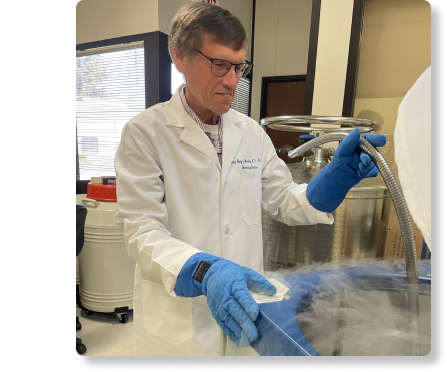
SunnyBay Biotech Chief Scientific Officer Gary Johanning pictured standing next to a liquid nitrogen tank

Want to learn more?

SunnyBay Biotech is advancing a first-in-class approach to cancer treatment, protected by four international patents and backed by decades of research.
View Pitch Deck Contact Us